Speakers
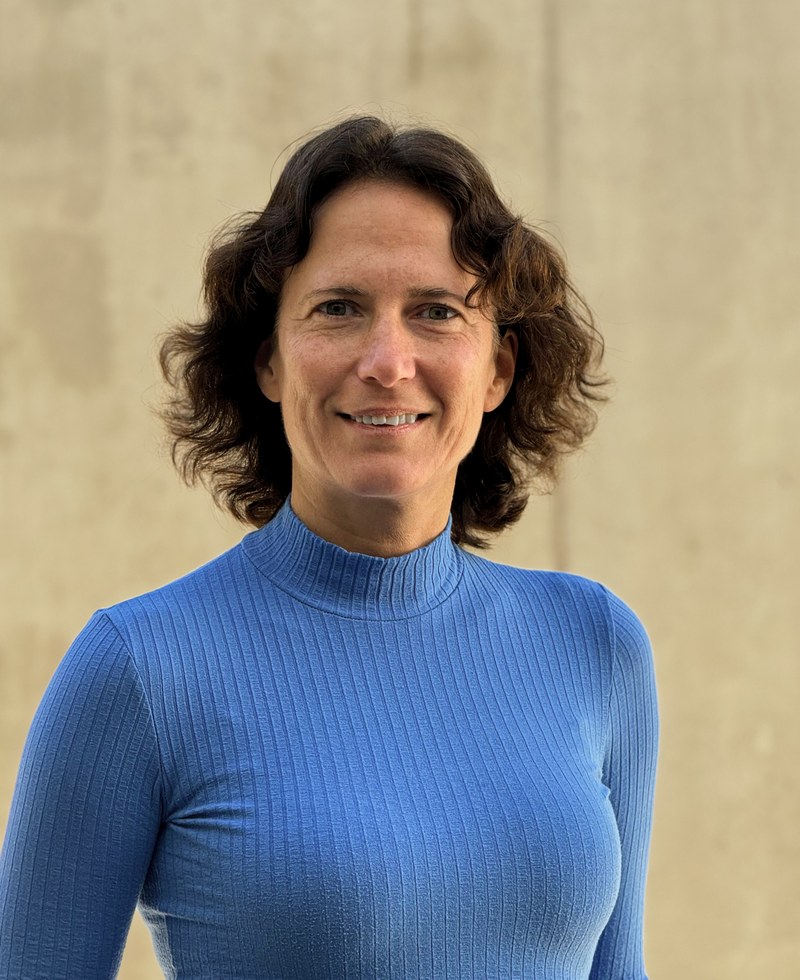 Maren Bennewitz https://www.hrl.uni-bonn.de/people/bennewitz |
Title: Challenges in Robotic Manipulation for Fresco AssemblyBiography:Maren Bennewitz is Professor for humanoid robots and vice rector for digitalization at the University of Bonn. She is additionally with the Lamarr Institute for Machine Learning and Artificial Intelligence and has been PI in several national and European projects. She is a member of the executive board and steering committee of the Cluster of Excellence PhenoRob - Robotics and Phenotyping for Sustainable Crop Production and founding member as well as steering committee member of the Center for Robotics, University of Bonn. In the course of her research career, she has contributed several innovative solutions for robotic systems co-existing and interacting with humans. Among them are navigation, manipulation, and active perception techniques for legged and wheeled robots as well as methods for detecting humans, analyzing their motions and preferences, and generating foresighted, personalized robot behavior. She is partner leader in the running EU Horizon Europe project RePAIR (Reconstructing the Past: Artificial Intelligence and Robotics Meet Cultural Heritage) about bi-manual arm motions and planning algorithms to place fresco pieces at desired poses, topics on which she published numerous articles in IEEE/RSJ IROS and IEEE-RAS Humanoids in the recent years. |
 Takeshi OISHI https://www.cvl.iis.u-tokyo.ac.jp/en/ |
Title: Cyber-Archaeology through 3D Vision TechnologiesBiography:Takeshi Oishi is Associate Professor at the University of Tokyo. His research focuses on reality-based modeling, digital archiving, and mixed reality. His Ph.D. thesis (2005) concentrated on the digital preservation and restoration of cultural heritage as- sets. He has managed the Great Buddha Project, which aims to digitize Japan’s most renowned Great Buddha statues, and the Bayon Digital Archival Project, dedicated to digitizing the Bayon Temple within the Angkor ruins in Cambodia. Additionally, he contributed to the Grand Egyptian Museum relocation project sponsored by the Japan International Cooperation Agency (JICA) and was honored with the Yomiuri International Cooperation Award as a mem- ber of GEM-JC. His various works on combining various sensing modalities (LiDAR, panoramic vision, Far-infrared, X-Ray, etc) on ground and flying mobile robot systems is regularly published in IEEE ICRA, IEEE/RSJ IROS, ECCV, and IEEE RA-L. |
 Gabriele Gattiglia https://www.unipi.it/en/about-us/organisation/people/gabriele-gattiglia-79589-en/ |
Title: Ἐγώ, αὐτόματη (I, AUTOMATA). What if archaeology met robotics?Biography:Gabriele Gattiglia is Associate Professor of Archaeological Research Methodology at the University of Pisa (Italy) and Director of the MAPPA Lab, an advanced research centre in Digital Archaeology. For over a decade, he has worked on applying Artificial Intelligence to archaeology, beginning with the Horizon 2020 ArchAIDE project. His current research explores both the technical and critical dimensions of AI in archaeological practice, with a particular interest in Contemporary Archaeology and how digital technologies shape our understanding of the past. He is the Principal Investigator of the Horizon Europe AUTOMATA project and Chair of the COST Action MAIA (Managing AI in Archaeology). |
 Agnese Babini http://linkedin.com/in/agnese-babini-28b7a6106 |
Title: From fixed setups to adaptive robotics: Hyperspectral Imaging for Cultural HeritageBiography:Agnese Babini is a conservation scientist specializing in hyperspectral imaging applications for cultural heritage. She received her PhD from the Norwegian University of Science and Technology (NTNU) in 2023 as a Marie Skłodowska-Curie Fellow within the ITN-CHANGE programme. Her thesis focused on developing hyperspectral imaging solutions for analysing historical stained-glass windows. From 2023 to early 2026, she worked as a Postdoctoral Researcher at the Italian Institute of Technology’s Centre for Cultural Heritage Technology (IIT-CCHT); during this time, she contributed to research on the potential of integrating hyperspectral imaging with robotics to automate and enhance the analysis of complex heritage objects and structures. |
 Alexander Bornik https://www.linkedin.com/in/alexander-bornik-10678069 |
Title: Heritage ROSS: Toward Automated Acquisition and Integrated Analysis of Heterogeneous Multisensory Data for the Preservation of Cultural HeritageBiography:Alexander Bornik is an independent researcher since March 2026. He developed a robotic system for autonomous multisensory documentation of cultural heritage at the University for Continuing Education Krems from 2024 to 2026. From 2019 to 2023 he worked as a key researcher for the Ludwig Boltzmann Institute for Archaeological Prospection and Virtual Archaeology with the goal optimally exploit heterogeneous prospection datasets through conjoint 3D visualization and processing. From 2014 to 2019 the worked as a key researcher for the Ludwig Bolzman Institute for Clinical-Forensic imaging on methods to optimally combine findings in forensic X-ray computed tomography and MRI data as well as 3D crime scene data to bridge between the fields of legal medicine and police investigations. During 2007- 2009 he was a post-doctoral researcher at Graz University of technology working on various projects in 3D visualization, virtual reality and 3D user interfaces. From 2001 to 2007 he worked as a research assistant at the Graz University of Technology developing methods for surgical planning based on CT and MRI using collaborative virtual and augmented reality systems and novel 3D user interfaces. He received a MS from the Graz University of Technology in 2001 and his PhD in computer science from the same university in 2007. |
|
2026 IEEE International Conference on Robotics & Automation |